

TABLE OF CONTENTS
Why Medical Delivery Is More Complex Than Most Healthcare Organizations Realize
For many healthcare organizations, employee drivers feel like a safe choice. They know the faces, the routes, the routines — and the assumption is that familiarity equals control and cost savings.
Medical Delivery Directly Impacts Patient Care and Clinical Outcomes
Across pharmacies, hospital systems, and laboratories, the decision to keep delivery in-house is rarely about cost alone. Without full visibility into operational risk, compliance burden, and downstream financial impact, employee driver programs often mask inefficiencies that specialized medical courier partners are built to eliminate.
|
Hospital Systems |
Pharmacy Delivery |
Specimen & Laboratory Operations |
| Nature of Deliveries | ||
|
Interdepartmental supplies, blood products, surgical instruments, records, medications across multiple campuses or facilities. |
Home infusion, specialty meds, controlled substances, long-term care medications. |
Diagnostic specimens requiring strict temperature, time, and traceability controls. |
| Compliance Complexity | ||
|
Must align with HIPAA + Joint Commission standards, often CLIA/CAP when labs are embedded; clinical impact of failures is high. Joint Commission, 2023 |
HIPAA + DEA where controlled meds present; pharmacy deliveries often require documented chain of custody and temperature control. DEA Pharmacy Compendium, 2023 |
CLIA + CAP + HIPAA; specimens are directly tied to diagnoses, where mishandling can invalidate tests. CLIA Final Rule, 2019 |
| Downstream Risks | ||
|
Delayed OR schedules, compromised patient care, increased staff overtime due to re-routing and resolution. Studies show delays in interfacility transport correlate with increased length of stay and cost. Health Affairs, 2021 |
Missed deliveries trigger reship, corrective actions, medication write-offs; pharmacy quality teams report delivery failures as a top operational drain. Pharmacy Times, 2022 |
Specimen redraws, repeat testing, and quality remediation are among the top drivers of lab cost overrun. One study estimated up to 12–15% specimen reject rates due to transport handling errors. CAP Today, 2020 |
| Hidden Costs | ||
|
Fuel + vehicle maintenance + scheduling labor + compliance training; average hospital courier programs run 20–30% higher than budgeted due to overtime and variability. Becker’s Hospital Review, 2022 |
Staff time chasing missed deliveries + compliance remediation + reputational impact; specialty pharmacies report fulfillment costs rising when delivery is in-house. Drug Store News, 2021 |
Repeat draws, corrective documentation, contract penalties; CLIA surveys emphasize specimen transport as a frequent deficiency point. CMS CLIA Surveys, 2023 |
Key Insights Across All Three
- Regulatory Exposure Is Real: HIPAA, CLIA, CAP, Joint Commission, and DEA all emphasize documentation, traceability, and risk controls. Failures in transport are cited in compliance findings year after year.
- Operational Risk Carries Clinical Consequence: Whether it’s delayed critical lab results, missed surgical schedules, or home infusions that don’t arrive, the impact goes beyond “logistics” — it affects care delivery.
- Perceived Cost Savings Often Disappear: When overtime, corrective action, re-deliveries, penalties, and compliance remediation are factored in, in-house delivery runs significantly higher than simple salary + fuel estimates.
- Specialization Matters: Dedicated medical couriers bring technology (real-time tracking, alerting), process controls (chain of custody, handling protocols), and SLAs that align with clinical expectations — not just transportation.
The consequences are visible across the industry. Midsized health systems lose up to $1 million annually due to mishandled specimens and therapies, including lost biopsies, damaged blood samples, and improperly stored medications. At the same time, more than 50% of nurses report courier-related errors that delayed or canceled at least one procedure in the past year, with each incident averaging $4,500 in direct and indirect costs.
To make a responsible decision about whether to keep pharmacy delivery in-house or partner with a specialized healthcare delivery provider, leaders must evaluate total operational cost, risk exposure, scalability, and long-term value. That is the framework we will examine in this article.
Hidden Costs of In-House Medical Delivery Programs
Direct Costs Are Only Part of the Equation
- Most pharmacy organizations are spending 30–50% more per delivery than they realize because they cannot see their true delivery costs.
- The biggest cost drivers are not wages, but deliveries per hour, undeliverable packages, overtime, rework, and compliance exposure.
- In-house delivery lacks the systems needed for sustainable, scale-ready control, causing hidden inefficiencies and margin erosion.
The Operational Costs Most Teams Don’t Measure
- Outsourcing may feel like losing control, but most organizations have already lost it through missed analytics, failed deliveries, and invisible cost leakage.
- The fastest path to better decisions is to calculate your actual cost per successful delivery and compare it against scalable alternatives.
These failures don’t point to a single delivery model as the culprit; instead, they surface that many healthcare organizations still lack visibility into their true all-in cost per delivery and lab delivery, and even fewer connect delivery performance to their P&L, clinical productivity, regulatory exposure, and patient experience.
Why In-House Medical and Pharmacy Delivery Looks Cheap—but Isn’t
Pharmacy Delivery Errors Carry Hidden Financial and Compliance Risk
If you only count driver wages and fleet costs, in-house delivery can look inexpensive. But in healthcare, delivery costs from exceptions and issues are part of the total operating environment:
- Re-attempted deliveries
- Missed pickups
- Temperature excursions
- Chain-of-custody gaps
- Documentation errors
- Patient not home / not notified
- Staff intervention to chase status or correct problems
All are rarely labeled as “delivery costs”; instead, they get buried under admin overhead, inventory shrinkage, pharmacy loss, compliance budgets, clinical rework, and patient service.
And, leadership can’t see the bleed because delivery spend is distorted by cost coding and scattered across systems:
- Redeliveries are often not tracked
- Write-offs are treated inventory shrinkage
- Staff time as admin overhead
- Dealing with Non-compliance events often show up
- Bad patient experiences/issues also show in management labor
The Hidden Costs of Employee Drivers in Healthcare Delivery
It’s far easier to tally driver wages and vehicle costs than to capture the actual cost of in-house delivery to the organization. Yet, in decision-making, all these facets play a role.
What Most Leaders Count—and Why It’s Only 30–40% of the Real Cost
At a glance, in-house delivery incurs:
- Driver salaries and overtime. Overtime can spike total driver payroll when volumes fluctuate.
- Fleet ownership or leasing. Depreciation, licenses, parking, and storage add up.
- Fuel, maintenance, insurance. Even conservative estimates typically understate wear-and-tear costs.
- Devices, uniforms, equipment. Scanner costs, tablets, and PPE.
These are accounting costs, aka expenses that show up on a budget line somewhere. These are more visible, but they’re only the tip of the iceberg.
It’s the hidden costs of employee drivers that sneak up on you and add up.
These add up. You may not see it on a budget line, but your patients feel the delays, your team feels the strain, and your organization pays the price.

“This undeliverable problem is largely avoidable. With a simple, systemized patient notification process that clearly communicates delivery windows, undeliverable packages can be dramatically reduced. At Go2 Delivery’s, we have cut undeliverable packages by 80% by improving the delivery process itself instead of adding more drivers.”

Why Most In-House Delivery Programs Can’t Measure Performance Accurately
In-house delivery operations often lack the basic performance controls needed to manage what is actually happening in the field. Most hospitals do not have reliable mechanisms to measure how long deliveries truly take, where time is being lost, how efficient routes are, or how consistently drivers follow required procedures. Without standardized KPIs for on-time delivery, route efficiency, stops per hour, proof of delivery, and regulatory compliance, leadership is left managing delivery by assumption rather than evidence.
The result is a largely manual operation with limited visibility and almost no real field auditing. In many internal programs, driver activity is not consistently reviewed, documentation is incomplete, and compliance standards such as HIPAA and PHI handling are not systematically enforced. Such gaps allow inefficiency and risk to persist unnoticed, even as delivery costs quietly continue to rise.
How Healthcare Organizations Should Calculate the True Cost per Successful Delivery
Deliveries per hour is the main multiplier behind overtime, burnout, and rising costs.
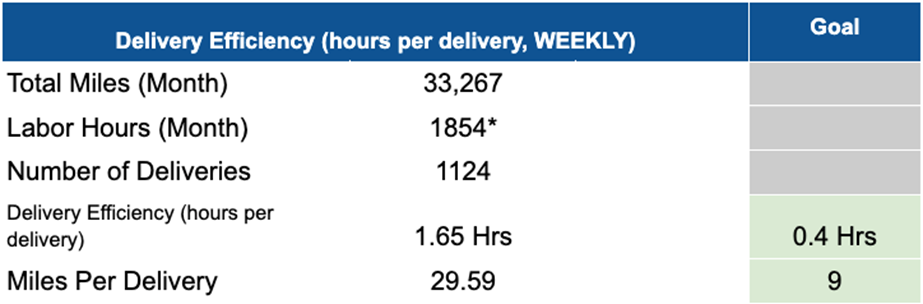
In efficient delivery operations, each successful delivery should take 0.3–0.4 hours; however, in real-world internal pharmacy programs, we routinely see 0.75–1.65 hours per delivery.
That single metric triggers everything that follows:
- Overtime explosions
- Coverage failures during peak demand
- Driver burnout and turnover
- Rising cost per successful delivery
- Shrinking operating margins
- Lack of delivery density due improper routing
One client generated $4,000 in overtime from a single driver in a single pay period because the system lacked capacity controls. It adds up. What could you be saving per delivery?
If you want a clean, defensible comparison between in-house drivers and a courier partner, look at true cost per successful delivery.
The 3-Bucket Delivery Cost Model
To expose the accurate cost of delivery, break expenses into three categories:
|
BUCKET A |
BUCKET B |
BUCKET C |
|
Visible Costs |
Variability Costs |
Failure Costs |
|
Wages, fleet, fuel, insurance, equipment |
Overtime, turnover, recruiting, training, leave, coverage gaps |
Rework, redraws, wasted product, compliance events, delays, lost revenue, reputational damage |
| True Cost per Successful Delivery = (A + B + C) ÷ Total Successful Deliveries | ||
Here’s some examples of how we’ve done for others…
Or, let us handle your cost evaluation for free.
If you’d rather not build this from scratch, we can calculate your real cost per successful delivery and show you exactly where the spend is leaking so you can make the in-house vs. outsource decision with numbers instead of assumptions.
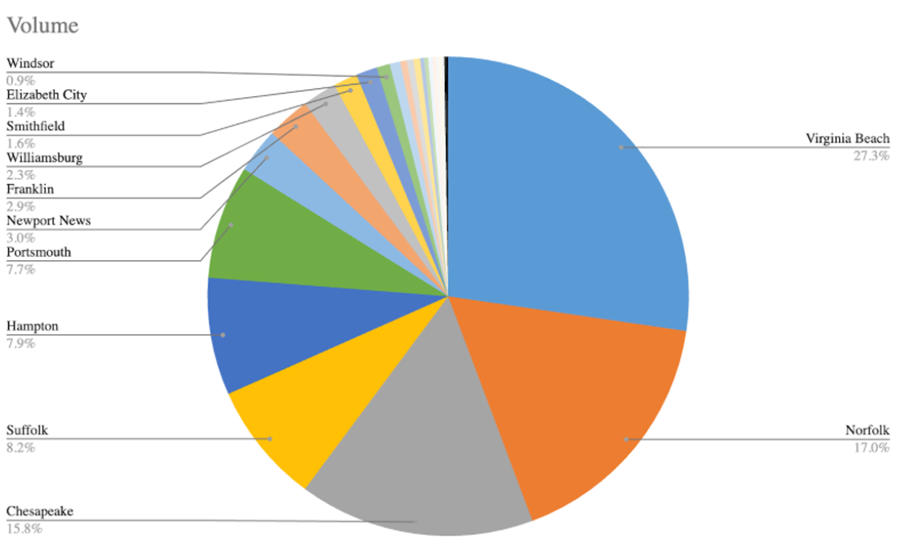
Here is a sample cost view breakdown we built for a healthcare organization, showing:
- Cost per delivery method (one-month snapshot)
- Delivery efficiency (time per stop, stops per hour, exception impact)
- Internal delivery density by area (where routes become unprofitable)
Cost Per Delivery Method
One Month’s Snapshot



When we analyze internal employee-driver programs, the same cost multipliers show up again and again:
- Low delivery stops per hour
- Geography expanding faster than routing capacity
- Higher re-attempt rates and missed pickups
- Over-servicing the same patients (more runs than necessary)
- No system for choosing the right delivery method per run
- Limited routing/dispatch tools to consistently meet deadlines
Why In-House Driver Programs Break Down as Delivery Volume Scales
In-house delivery creates a dangerous financial imbalance.
When volume spikes, organizations absorb the impact through overtime, coverage gaps, rising exception rates, and staff burnout.
When volume drops, wages, benefits, fleet costs, and insurance remain fixed, causing the cost per delivery to climb.
Labor and fleet become rigid expenses that do not flex with demand, making both growth and contraction significantly more expensive and far less predictable.
Internal driver programs tend to fail at the same inflection points:
- Expansion beyond core jurisdictions
- Growth in home delivery volume
- Rising undeliverable when patients are not home/notified properly
- Increasing overtime to compensate for capacity gaps
- No routing intelligence to manage deliveries per hour
- No performance visibility beyond GPS dots on a map
- Lack of effective systems and specialized staffing
What appear to be manageable operational issues are, in fact, structural limitations.
Without centralized routing and workload optimization -> organizations lose control of their most critical cost driver: deliveries per hour when using internal medical employee drivers for the last mile delivery.
Without proactive patient communication -> undeliverable packages and returns multiply due to incorrect addresses, patients are not home, etc
Without performance analytics -> leadership is forced to manage by assumptions and more subjective than evidence with data. Overtime becomes the default response to every surge, quietly inflating cost per delivery and accelerating burnout.
These are the inherent weaknesses of in-house pharmacy delivery, hospital system delivery networks and lab specimen laboratories; it cannot scale sustainably without purpose-built systems.
Employee Drivers vs Medical Courier Services — What Really Changes
|
Dimension |
In-House Delivery |
Medical Courier Partner |
|
Cost Flexibility |
Rigid fixed costs |
Variable & scalable |
|
Risk Exposure |
High internal liability |
Risk shared & mitigated |
|
Compliance Burden |
Internal responsibility |
Embedded & standardized |
|
Scalability |
Constrained by labor & fleet |
Elastic capacity |
|
Internal Labor |
High coordination overhead |
Minimal internal burden |
|
Visibility & Control |
Fragmented & manual |
Centralized & real-time |
|
Failure Impact |
Disruptive & expensive |
Contained & managed |
|
Cost Predictability |
Unknown |
Stable & forecastable |
With the performance picture now clear, the decision shifts from price to long-term value.
Compliance, Risk, and Liability: What Most Healthcare Teams Underestimate
Compliance and Liability Risks Increase with In-House Delivery Models
Financial performance means very little if hidden risk is quietly compounding behind the scenes:
- HIPAA violations can result in fines ranging from $100 to $50,000 (or even more) per incident, and higher amounts if negligence is involved.
- Temperature excursions often require formal investigation and disposal protocols, adding both direct and indirect costs.
- DEA, CAP, and CLIA oversight add layers of regulatory expectations and consequences.
- Chain-of-custody breakdowns can shift liability back to the provider.
With in-house delivery, that risk lives inside your organization. With outsourcing, the risk doesn’t disappear, but it can be reduced if the courier provider has certified staff, formal controls, and auditable processes.
Why Most Healthcare Organizations Are Underinsured for Delivery Risk
Employee drivers place delivery liability squarely on your organization’s insurance and legal infrastructure. Many healthcare organizations are self-insured; others assume their existing coverage is “good enough” and many organizations are under insured.
On the courier side, many providers carry insurance, but many are underinsured as well, and the policy types (and exclusions) matter. Additionally, when legal and risk management teams form Healthcare Organizations prescribe the type types of insurance required for third party courier services, most don’t understand what the types of policies cover the right exposure risks. Most assume General Liability and ‘Owned Auto’ Insurance cover the majority of the risks, when it carries very few scenarios.
Here’s the coverage map leaders should understand (and validate):
|
Type |
What it |
What it |
Limit |
|
Umbrella Liability Policy |
|
|
|
|
General Liability Insurance |
|
|
|
|
Cargo Insurance |
|
|
|
|
Non-Owned Auto Insurance |
|
|
|
|
Owned Auto Insurance |
|
|
|
|
Errors & Omissions Insurance |
|
|
|
|
Cyber/ Privacy Liability Insurance |
|
|
|
|
Bonding |
|
|
|
Three Insurance Blind Spots That Catch Healthcare Teams Off Guard
#1 General Liability Insurance
General Liability is important, but it’s also narrow. It primarily covers third-party bodily injury and property damage arising from your operations.
It does not automatically cover the issues leaders in healthcare logistics usually worry about—such as delivery mistakes, chain-of-custody failures, temperature excursions, or privacy incidents.
#2 Missing Non-Owned Auto Coverage
Nearly 64 use Independent Contractor Drivers who use their own vehicles.
If you don’t have Non-Owned Auto coverage in place, you may be assuming the driver’s personal policy will protect you and that’s a dangerous assumption.
#3 Cyber/Privacy Liability
Healthcare delivery is increasingly digital with tracking portals, dispatch apps, EHR/order integrations, status notifications, electronic signatures, photos, and data transfers. That creates real cyber/privacy liability risk.
Even if you trust the courier’s security posture, you still want coverage in case something goes wrong, because breaches, misrouted data, or exposed PHI can quickly turn into expensive notification, legal, and compliance events.
Mitigate this by validating which data is shared, understanding how it’s protected, and ensuring your insurance program includes cyber/privacy coverage that aligns with the reality of your delivery workflow.
Is Your Employee Driver or Medical Courier Service HIPAA-Compliant?
Recent data indicate that more than 5 assessment, and we both know HIPAA violations are not cheap.
It’s surprising how casually HIPAA exposure happens, whether through exposed medical details on paperwork, visible labeling, incorrectly-stored photos, or inappropriately blasted status updates. Just because it’s been this way for a while without incident doesn’t mean it shouldn’t be looked at and improved.
If you outsource your deliveries to a courier service, how do they handle HIPAA or PHI certifications and training?
The minute delivery becomes third-party, the stakes stay the same—but you’re trusting another organization’s process.
Ask the potential delivery providers the following questions:
- How do you train and certify couriers on HIPAA/PHI prevention (and related handling requirements like OSHA/blood-borne pathogens where relevant)?
- How do you audit driver behavior and documentation to ensure compliance stays consistent in the field?
- If an exposure happens, what is the escalation protocol—and what insurance/protections actually apply?
A HIPAA-compliant medical courier embeds regulatory discipline into every shipment. Real-time tracking, documented handoffs, certified driver training, and automated reporting are built-in strategic risk mitigators.
When Healthcare Organizations Should Outsource to a Medical Courier Service or Pharmacy Delivery?
Not always. The outcome depends on who you partner with and whether they bring the systems, controls, and visibility your operation would otherwise have to build and manage internally. That’s why you can’t compare delivery models on sticker price alone; you have to compare net cost: the all-in cost of doing the work and absorbing the failures.
Because in healthcare, cheap delivery gets expensive fast. One temperature excursion involving biologics can wipe out thousands of dollars in product, trigger formal investigations, and force audits and retraining. Those downstream costs often exceed any perceived savings from keeping delivery in-house.
What Does a Good Courier Partner Improve?
High-performing medical courier service partners typically provide:
- Optimized routing & capacity planning
- Real-time tracking & performance dashboards
- Automated chain-of-custody documentation
- Integrated technology with client systems
- Formal compliance controls & audit trails
Which results in:
- Fewer Exceptions: Professional dispatch systems and proactive communications reduce missed pickups and late deliveries.
- Higher First-Attempt Success: Achieving first-attempt delivery success reduces rework cycles and improves patient outcomes.
- Lower Compliance Exposure: Standardized protocols, chain-of-custody documentation, and audit trails reduce the likelihood and cost of regulatory infractions.
- Reduced Internal Labor: When delivery is outsourced, internal teams are freed from coordination, status updates, and exception handling, allowing them to focus on patient care and clinical support.
- Predictable Scaling: Outsourced models are designed to absorb volume growth without exponential increases in cost or internal strain.
How many of these boxes does your current delivery model truly check?
When Is the Right Time to Outsource Healthcare Delivery?
Outsourcing becomes a strategic imperative when growth accelerates faster than staffing can absorb, when turnover and overtime erode cost assumptions, when compliance risk expands, and when leadership lacks visibility into delivery performance.
That moment often arrives when you:
- Do not have enough delivery coverage to support growth
- Experience constant capacity stress during busy periods because drivers prefer overtime over efficiency
- Are actively trying to protect your budget from unpredictable cost spikes
- Discover that your biggest cost trigger is no longer wages, but deliveries per hour
Organizations that transition to a specialized healthcare courier model typically see immediate improvements across multiple dimensions of performance:
- Delivery operations stabilize
- Exception rates fall
- Internal teams recover time and focus
- Leadership gains visibility and control
- Costs become predictable instead of reactive.
Now, outsourcing converts delivery from a constant operational liability into a strategic asset. Instead of fighting fires like missed pickups, driver shortages, compliance scares, and mounting overtime, organizations move into a position of proactive management. They can plan capacity with confidence, support growth without adding internal complexity, and reduce regulatory exposure while improving patient experience.
Many leaders fear that outsourcing means “losing control.”
In reality, control has already been lost in missed analytics, unmeasured inefficiencies, failed deliveries, and invisible cost leakage. Once organizations calculate their true cost per successful delivery, they consistently find that far more control is regained than surrendered.
The real question here is, how much money do you want to keep losing to bureaucracy?
How GO2 Delivery Helps Healthcare Organizations Reduce Cost, Risk, and Complexity
A Dedicated Medical Courier Partner for Hospitals, Labs and Pharmacies
With cost, performance, and risk now on the table, healthcare leaders need a practical framework to evaluate their current delivery model. They should look at:
Reliability and Exception Management
Potential Gap Awareness
- How often do deliveries fail, arrive late, or require intervention?
- How frequently do exceptions trigger rework, rescheduling, or additional staff involvement?
- Do you have the systems to properly track these events?
- Do you, or a potential delivery service provider, check performance metrics regularly?
- During peak volume or unexpected surges, does reliability improve, remain stable, or degrade?
- Are exception rates tracked over time, or are they handled only reactively?
If reliability declines as demand increases, your delivery model is fragile, and fragility is expensive.
Technology, Automation and Real-Time Visibility
Potential Gap Awareness
- Can your team see delivery status in real time without calling drivers or dispatch?
- Are you alerted to problems before they become failures, or only after the damage is done?
- Does the system integrate with your internal workflows, EHRs, or order management tools?
- Can leadership access performance metrics without manual reporting?
- Are you leveraging technology and innovation to streamline your processes?
If your staff must chase information, your current delivery model is affecting productivity.
Compliance Controls, Chain of Custody and Documentation
Potential Gap Awareness
- Is your chain of custody documented automatically and consistently?
- How is temperature integrity monitored, logged, and audited?
- Can documentation be produced quickly during inspections or investigations?
- Are drivers formally trained on HIPAA, PHI handling, and regulatory protocols?
Ideally, everyone is on the same page (and there is an actual, physical protocol for handling compliance).
Internal Labor Consumption and Operational Drag
Potential Gap Awareness
- How much staff time is spent coordinating deliveries, resolving issues, and tracking down information?
- Which departments are repeatedly pulled into delivery problems?
- How often does delivery distract leadership from clinical and strategic priorities?
- How does that affect your scalability to take on more volume or business?
- How do you measure the soft costs, including management labor and morale of dealing with issues?
- Are these costs factored into the overall cost?
High internal labor consumption is one of the most apparent signs of a delivery model that costs far more than it appears.
Scalability Under Growth and Volume Pressure
Potential Gap Awareness
- What happens when delivery volume doubles?
- Does your current employee driver model become smoother or more chaotic?
- What additional infrastructure is required to manage that?
- Can your delivery model absorb growth without sacrificing reliability?
If scaling requires proportionally more effort and stress, your delivery model is limiting growth.
Cost predictability, Transparency and Financial Control
Potential Gap Awareness
- Do you understand precisely why costs rise when they do?
- Do you track profit and how delivery costs impact that?
- Can leadership forecast delivery costs with confidence six months out?
- Is pricing aligned with performance outcomes or with reactive problem-solving?
- Do you know what the target delivery cost needs to be?
- Do you have the proper tools to see the real cost of delivery when done internally?
When costs feel uncontrollable, it’s usually because the system itself lacks control.

Related blog articles

3 Nov, 2025 4 Minutes to Read

7 Important Considerations when Selecting a Medical Courier Service Medical courier services are cru...
14 Jul, 2025 6 Minutes to Read

The Anatomy of a Stat Delivery when using a Medical Courier Service In the healthcare sector, timely...
25 Jun, 2024 2 Minutes to Read